Turning Loyalty Into Revenue
I led UX for Zipcar's first Rewards experience, from early program shaping through post-launch iteration, across app, web, and member services.
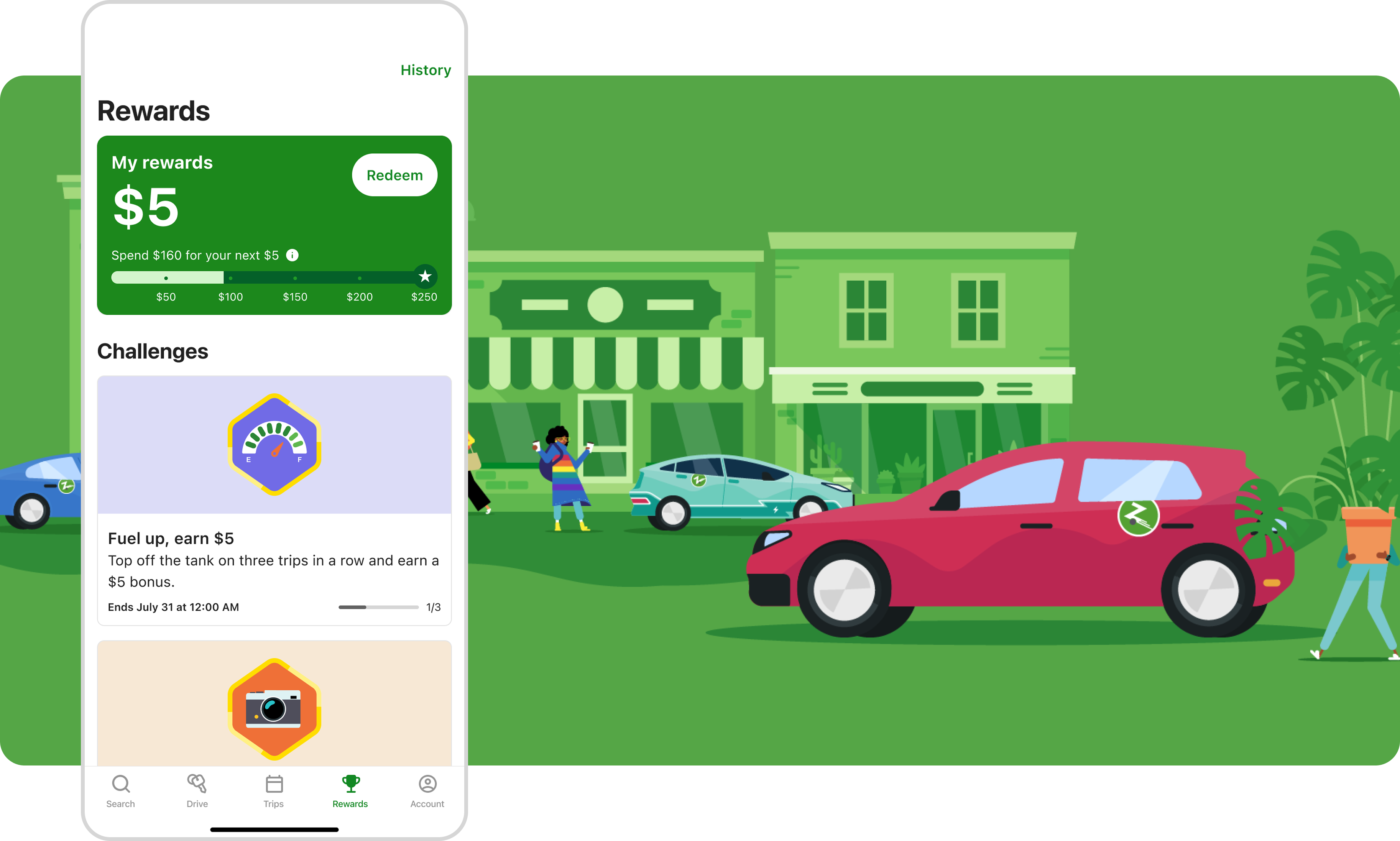
Outcomes
+2.47%
monthly revenue increase
$4.6M
annualized EBITDA impact
81%
redemption rate in 6 months
“With Rewards, I choose Zipcar over other transportation options since I know I earn rewards.”
— Zipcar member, post-launch research
My Role
Product definition
Helped shape earning, redemption, challenges, milestones and MVP scope.
Experience architecture
Defined a cohesive model across iOS, Android, web and member-service tooling.
Cross-functional alignment
Led workshops with Product, Engineering, Marketing and Member Services.
Research & iteration
Established continuous testing from pre-build concept validation through post-launch optimization.
Scale
Designed the rules and architecture to support future member segments.
The challenge
Starting from scratch
Member research, support themes, and app store reviews consistently surfaced the same gap: Zipcar had no way to recognize loyal, positive community behavior. Rewards was built to increase trip frequency, reduce churn, and give members a reason to keep choosing Zipcar.
As the lead designer on a net-new loyalty program, my role spanned early program shaping through post-launch measurement. I ran unmoderated research, facilitated cross-functional workshops across product, marketing, and engineering.
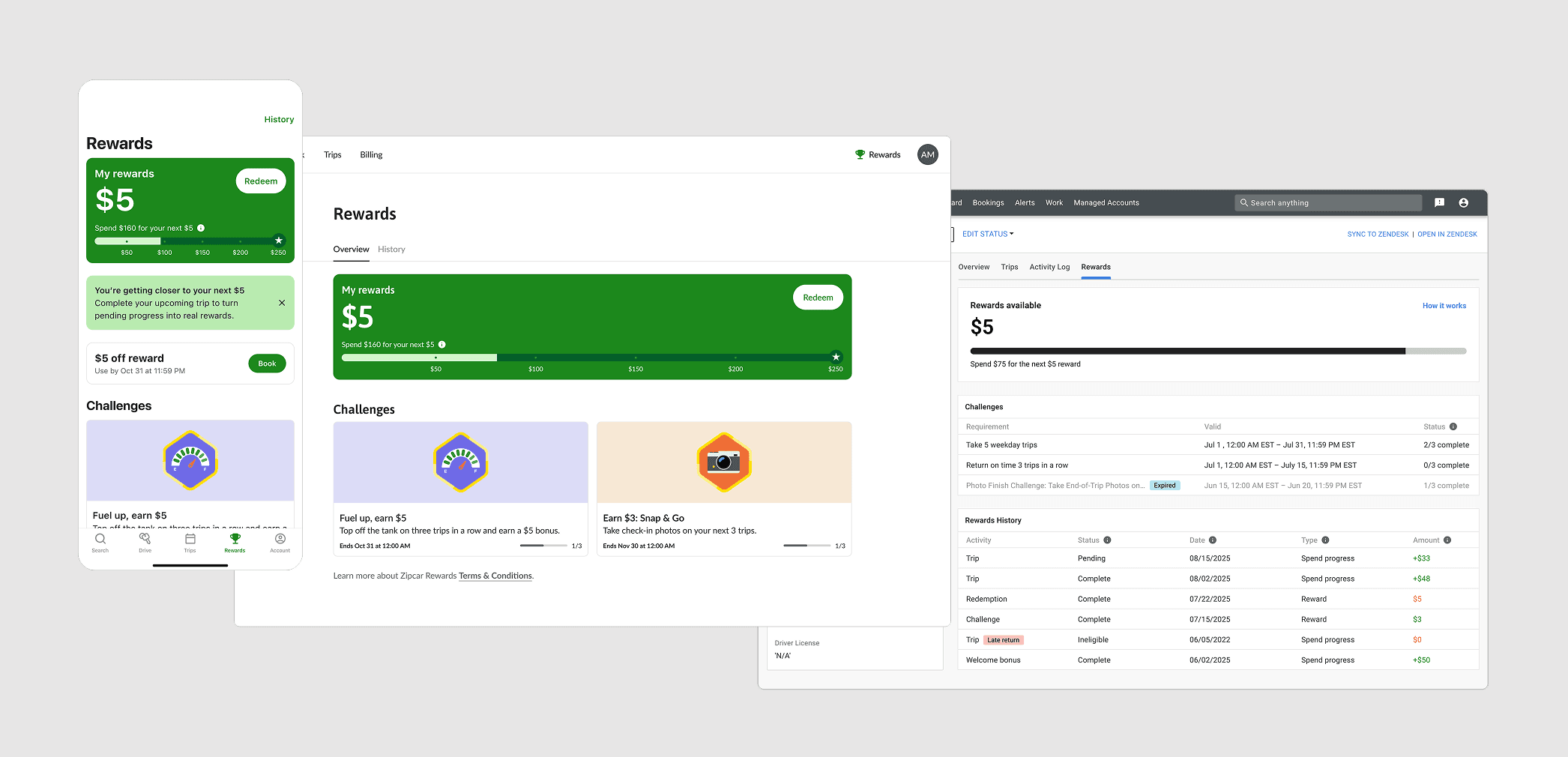
I solved for very different platforms, member-facing app + web, and internal member services, while still delivering a cohesive, end-to-end experience
Approach
Continuous research
A continuous research cadence including early resonance interviews, Maze prototype tests, and post-launch moderated sessions, kept us from shipping assumptions. Post-launch studies surfaced rage-clicking and comprehension gaps in the progress tracker. We used those findings to tighten hierarchy, cues, and education before they became retention risks.
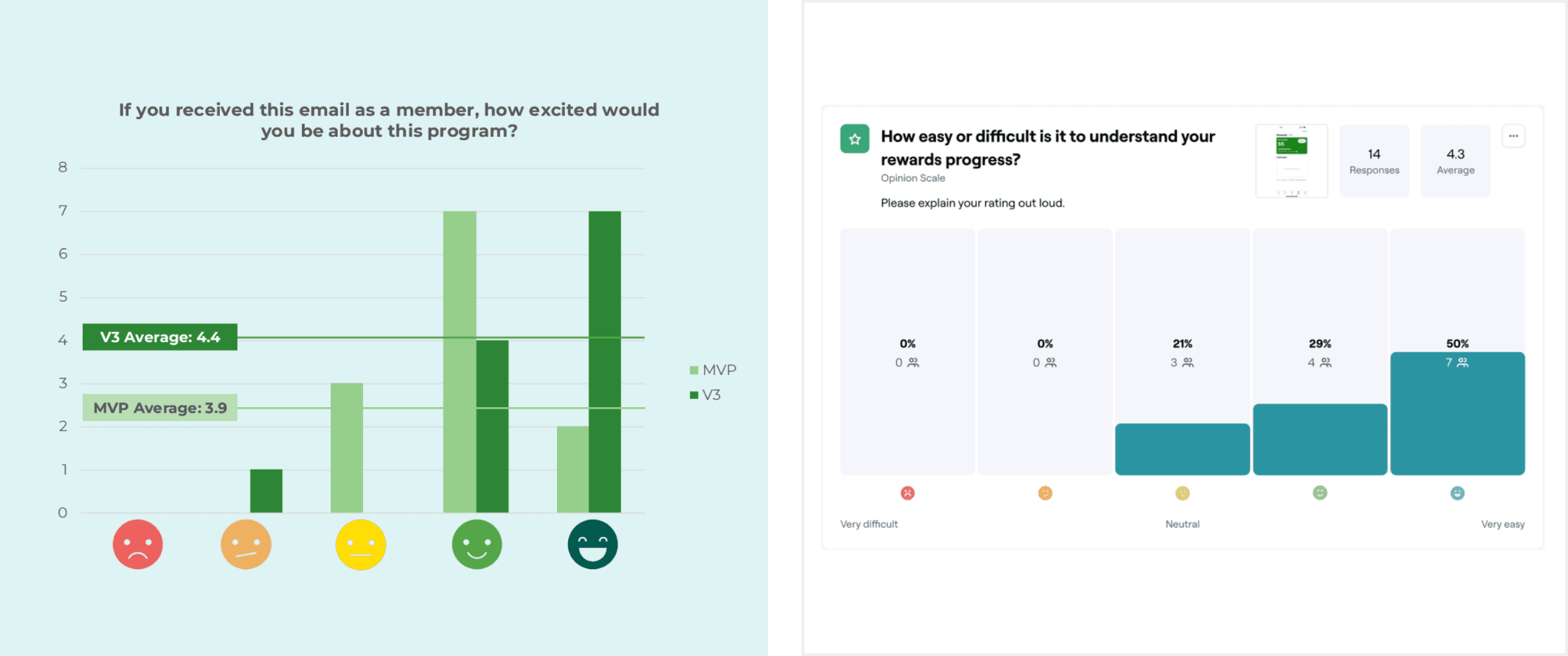
We ran a resonance test to gauge members’ level of interest in a rewards program and expectations, and ongoing research throughout
Clarity, motivation, and trustworthiness by design
I prioritized a simple, trackable Rewards model with flexible redemption, challenges, and prominent in-app access, anchored by two questions every member needs answered at a glance: What have I earned? and How far do I have to go to my next reward?
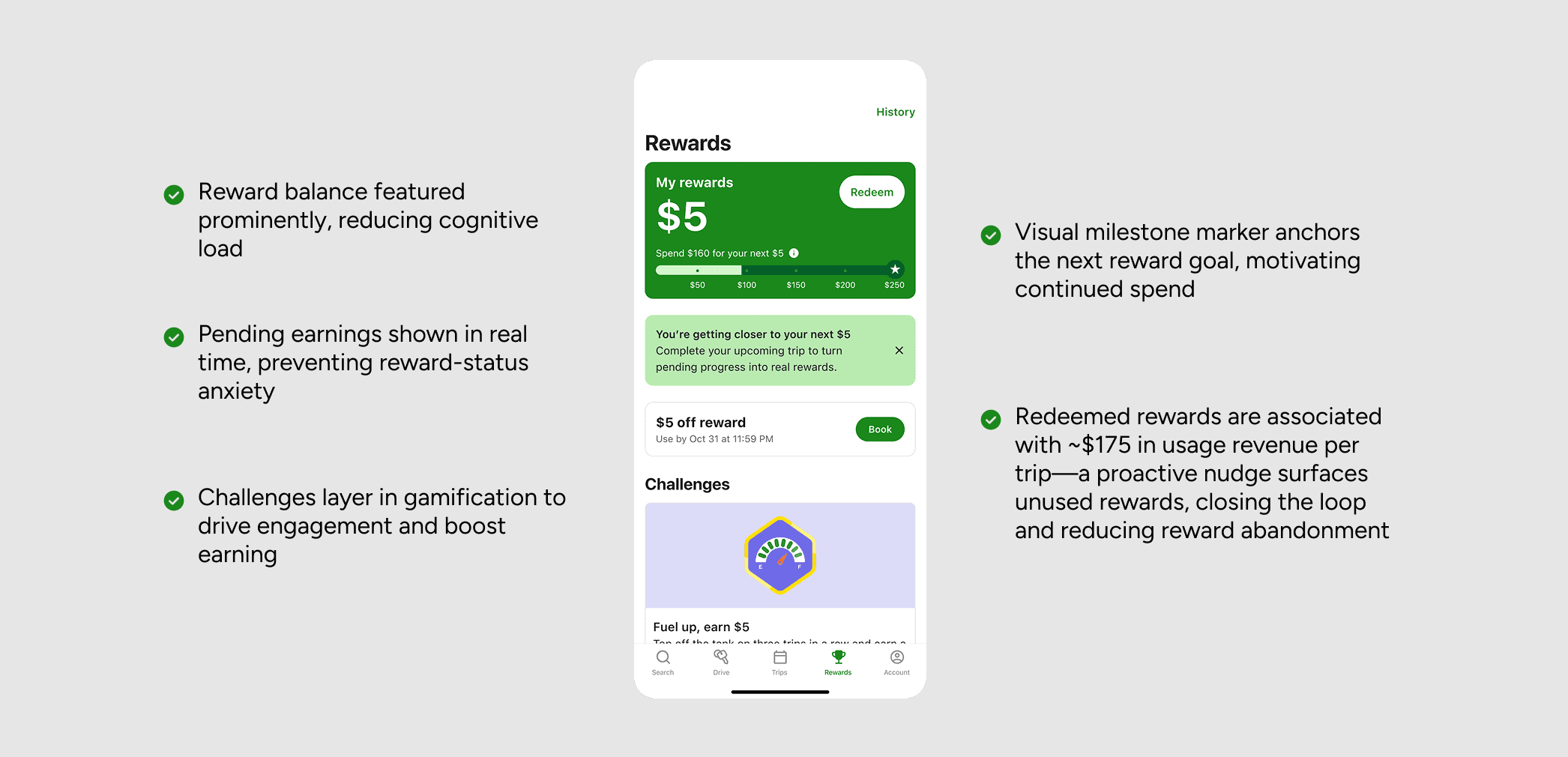
Data informed decisions: the experience increased motivation to return and reduced the risk that Rewards would feel too abstract
Design sprints
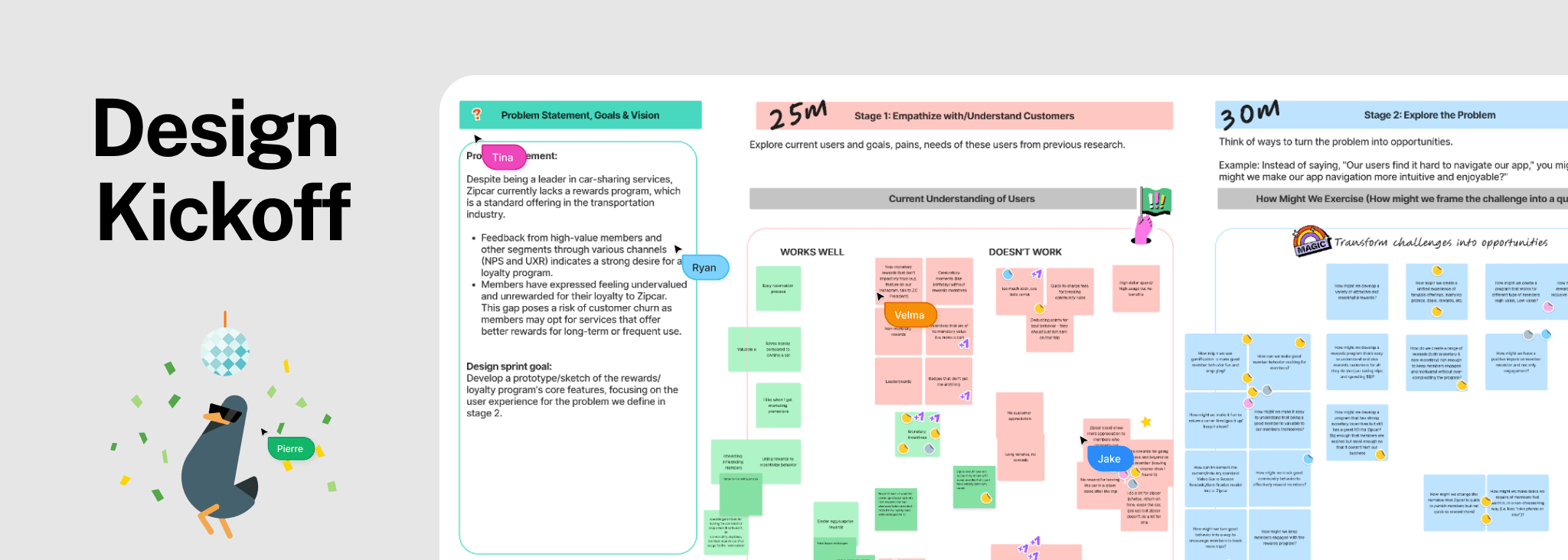
I ran multiple design sprints to align product, engineering, marketing, and member services. These sprints were pivotal in shaping the Rewards experience. We established a collective mental model around Rewards, defined what's important for the business and members, pushed us to define requirements for the MVP, and how we could grow the program.
Project challenges
Points to dollars
Mid-project, accounting required us to shift from a points model to a dollar-based system, which was a bigger change than it sounds. It meant rebuilding the core mental model members would use to understand the program. I simplified it down to one rule: $1 spent = $1 toward Rewards. I ran unmoderated research to validate the model before we handed off to engineering, and we kept the timeline intact.
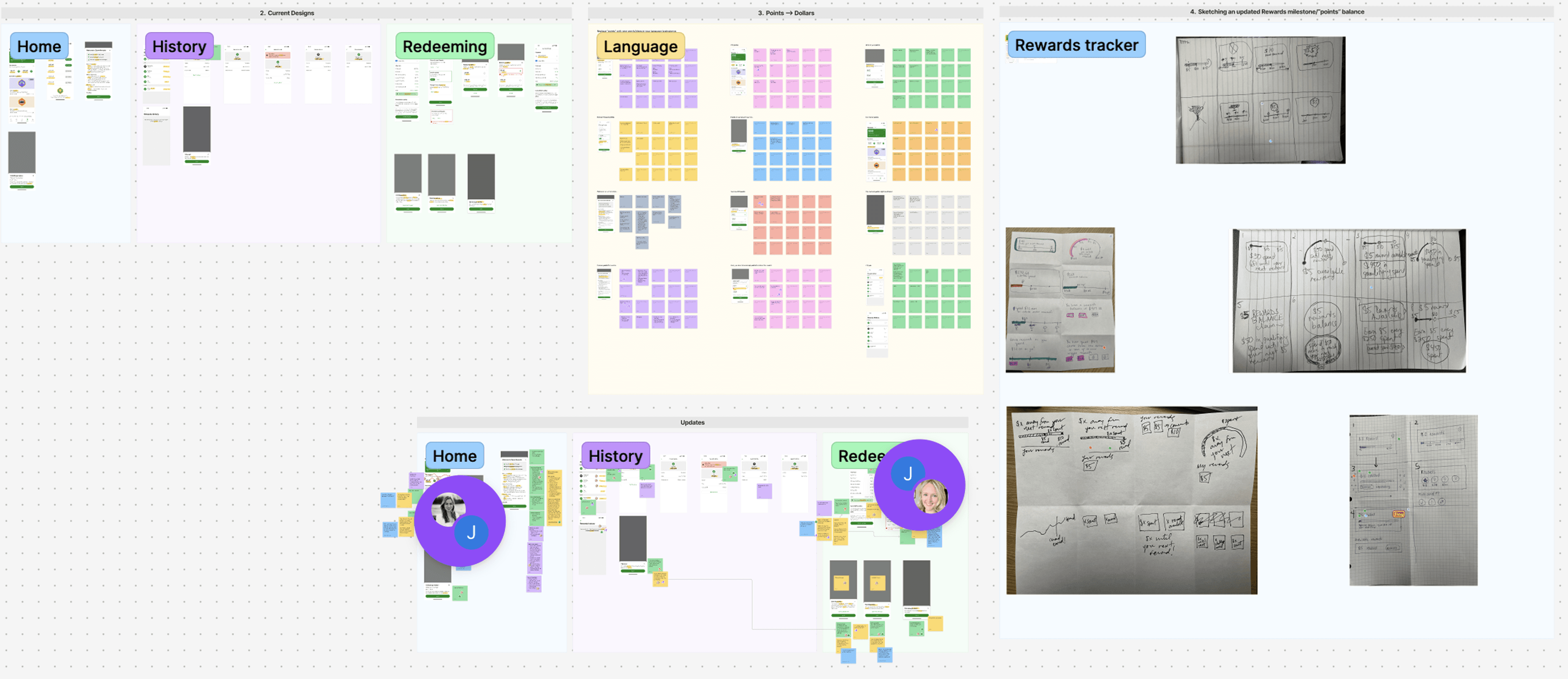
I ran a workshop to align stakeholders on language, features, and functionality that would have to change
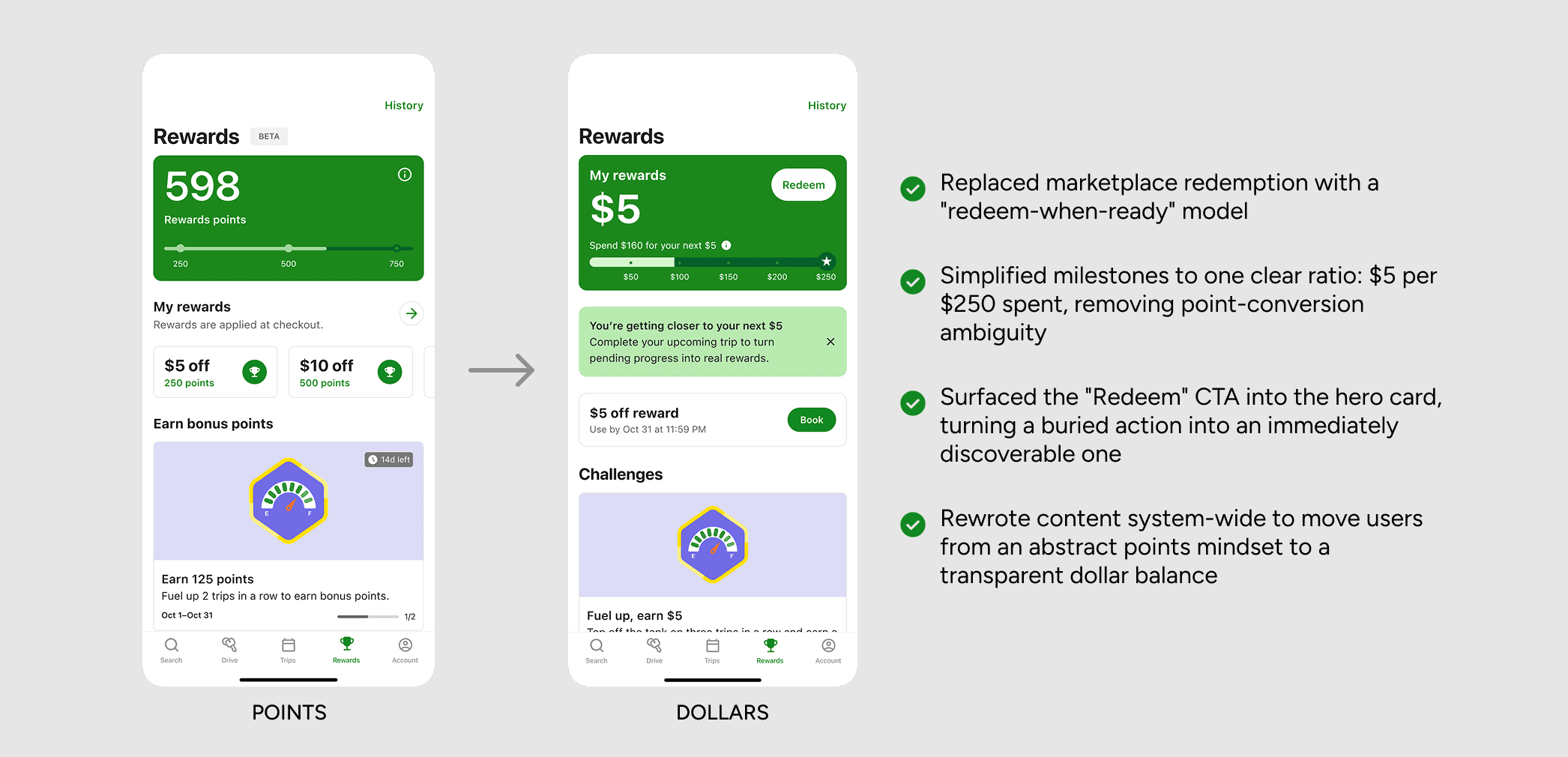
I redesigned how members would experience Rewards from the earning logic, redemption model, and content
Promotions integration
One of the core challenges was introducing Rewards into an existing Promotions ecosystem without breaking trust, logic, or platform consistency. Promotions were already an important lever for short-term revenue spikes, so I had to ensure the new Rewards model could coexist with existing promo behavior in a way that felt seamless to both the business and the member. To members, a promo and a reward are not meaningfully different. They simply expect savings to work clearly and predictably.
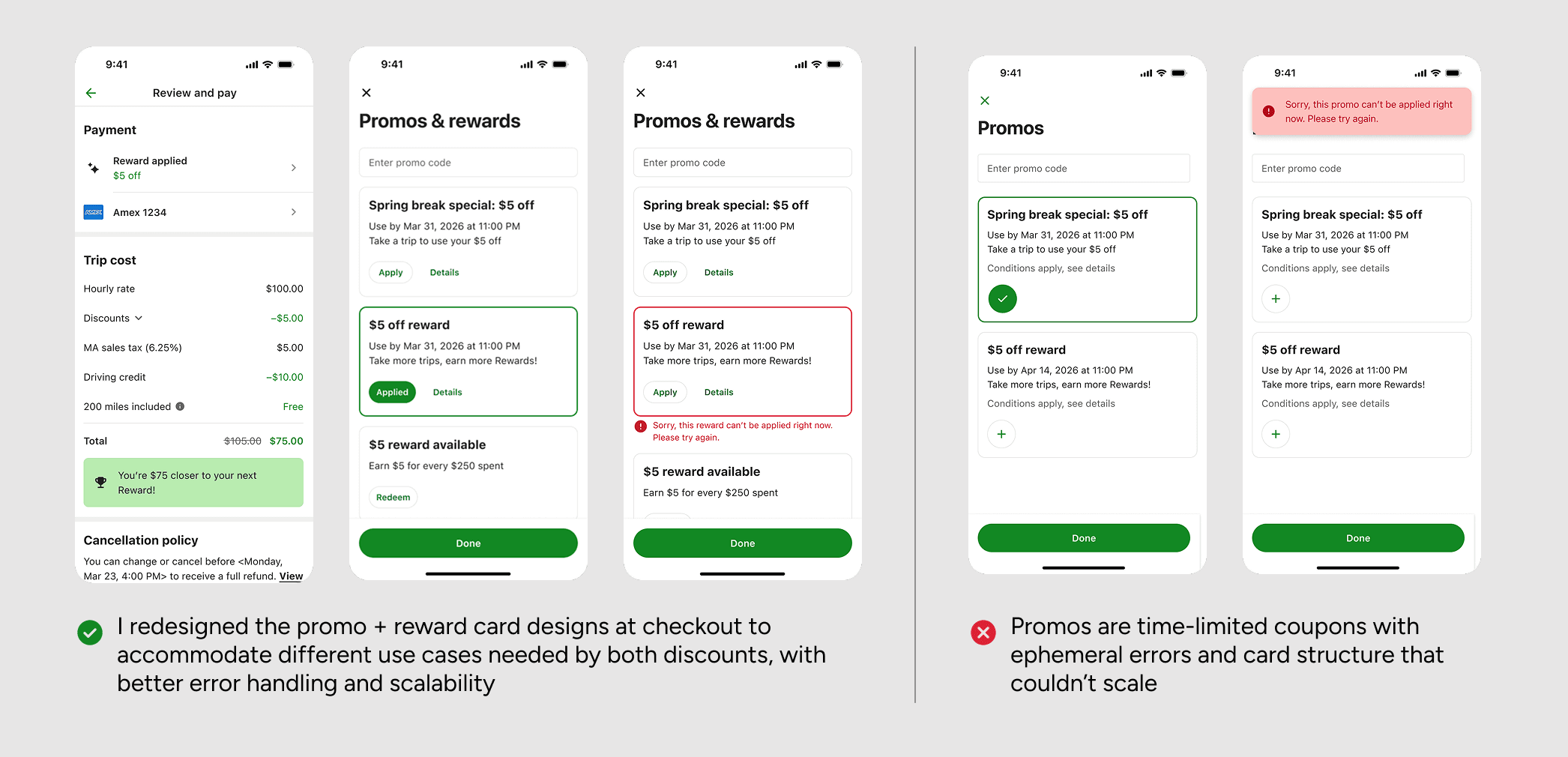
Building practice and the product
Faster, self-serve research
I piloted Lyssna, a self-serve usability testing tool, and ran the first studies on Rewards myself before bringing other team members along to run their own. The team adopted it broadly. Faster, more frequent testing without needing to loop in a researcher every time.
Version management system
I used Rewards to develop a version management system built on Figma branching and version history — a way to document design decisions, track changes over time, and make handoffs to engineering cleaner. I wrote it up as a Version Management Guide, and the team adopted that too.
What's next
Built to scale
Rewards launched to consumer members and is already delivering measurable business impact. The next phase expands the program to University and Uber business segments — using the same core architecture, making expansion low-effort and high-confidence. Planned iterations include smarter progress visualization, milestone animations, and just-in-time education informed by what post-launch research taught us about where members lose momentum.